
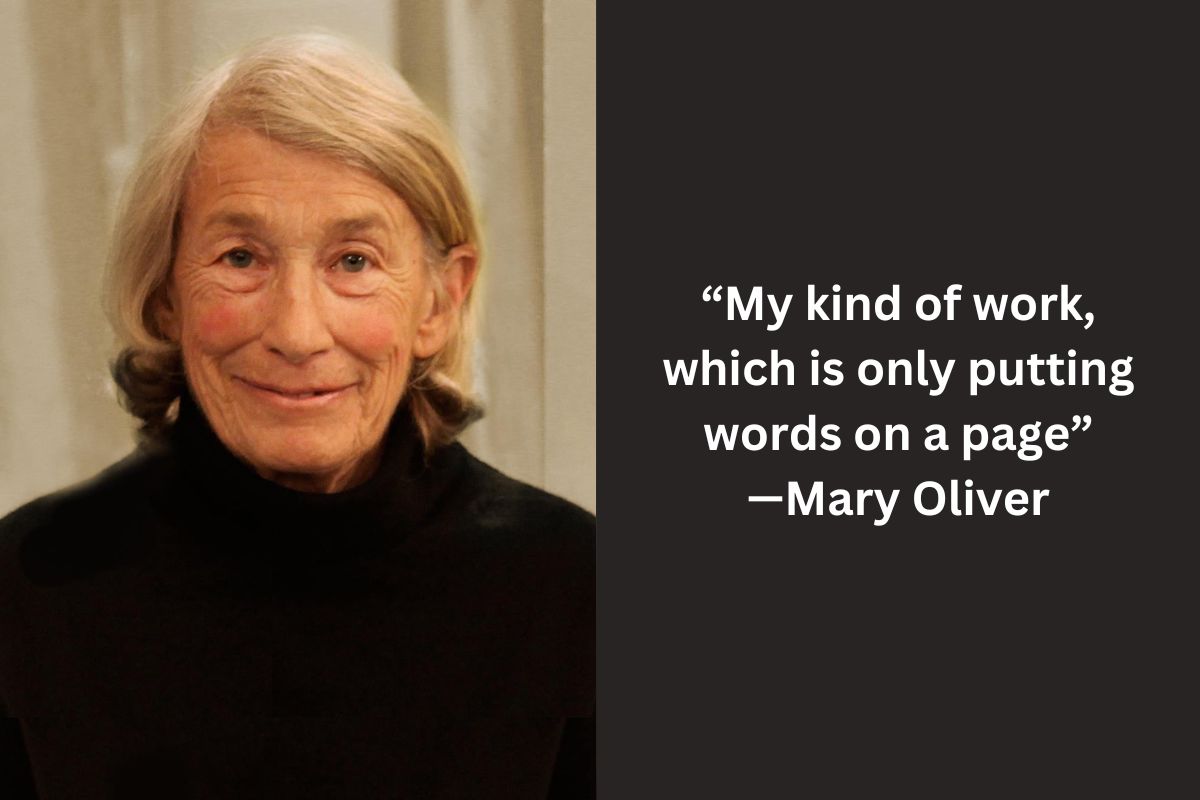
 We know that Mary Oliver (September 10, 1935–January 17, 2019) was a recipient of the Pulitzer Prize for Poetry and a woman of immense talent who lived in the present moment, loved her dog Percy, and celebrated nature.
But we don’t know much about her life before acclaim and accolades made her one of America’s most beloved wordsmiths. A glimpse of that life, however, was revealed in her hour-long poetry reading on Oct. 15, 2012 at the 92nd Street Y.
“You don’t have a lot of money when you want to be a poet,” Oliver said. She further explained to the audience that there was a time when she could barely afford basic necessities, much less the paper needed to write her poems.
So to make ends meet, she went to work at a printing company, a place where she not only earned a living but also earned an opportunity to practice her craft. The management let her keep a few 4-by-11 paper trims, which had just enough space to jot down a poem and nourish her creativity.
One of the pieces born that way was “White Heron Rises Over Blackwater,” included in “Devotions: The Selected Poems of Mary Oliver.” And this is what I would like to share with you today. Enjoy!
WHITE HERON RISES OVER BLACKWATER
from “Devotions” by Mary OliverI wonder
[nbsp][nbsp][nbsp][nbsp][nbsp][nbsp][nbsp]what it is
[nbsp][nbsp][nbsp][nbsp][nbsp][nbsp][nbsp][nbsp][nbsp][nbsp][nbsp][nbsp][nbsp][nbsp]that I will accomplish
[nbsp][nbsp][nbsp][nbsp][nbsp][nbsp][nbsp][nbsp][nbsp][nbsp][nbsp][nbsp][nbsp][nbsp][nbsp][nbsp][nbsp][nbsp][nbsp][nbsp][nbsp]todayif anything
[nbsp][nbsp][nbsp][nbsp][nbsp][nbsp][nbsp]can be called
[nbsp][nbsp][nbsp][nbsp][nbsp][nbsp][nbsp][nbsp][nbsp][nbsp][nbsp][nbsp][nbsp][nbsp]that marvelous word.
[nbsp][nbsp][nbsp][nbsp][nbsp][nbsp][nbsp][nbsp][nbsp][nbsp][nbsp][nbsp][nbsp][nbsp][nbsp][nbsp][nbsp][nbsp][nbsp][nbsp][nbsp]It won’t bemy kind of work,
[nbsp][nbsp][nbsp][nbsp][nbsp][nbsp][nbsp]which is only putting
[nbsp][nbsp][nbsp][nbsp][nbsp][nbsp][nbsp][nbsp][nbsp][nbsp][nbsp][nbsp][nbsp][nbsp]words on a page,
[nbsp][nbsp][nbsp][nbsp][nbsp][nbsp][nbsp][nbsp][nbsp][nbsp][nbsp][nbsp][nbsp][nbsp][nbsp][nbsp][nbsp][nbsp][nbsp][nbsp][nbsp]the pencilhaltingly calling up
[nbsp][nbsp][nbsp][nbsp][nbsp][nbsp][nbsp]the light of the world,
[nbsp][nbsp][nbsp][nbsp][nbsp][nbsp][nbsp][nbsp][nbsp][nbsp][nbsp][nbsp][nbsp][nbsp]yet nothing appearing on paper
[nbsp][nbsp][nbsp][nbsp][nbsp][nbsp][nbsp][nbsp][nbsp][nbsp][nbsp][nbsp][nbsp][nbsp][nbsp][nbsp][nbsp][nbsp][nbsp][nbsp][nbsp]half as brightas the mockingbird’s
[nbsp][nbsp][nbsp][nbsp][nbsp][nbsp][nbsp]verbal hilarity
[nbsp][nbsp][nbsp][nbsp][nbsp][nbsp][nbsp][nbsp][nbsp][nbsp][nbsp][nbsp][nbsp][nbsp]in the still unleafed shrub
[nbsp][nbsp][nbsp][nbsp][nbsp][nbsp][nbsp][nbsp][nbsp][nbsp][nbsp][nbsp][nbsp][nbsp][nbsp][nbsp][nbsp][nbsp][nbsp][nbsp][nbsp]in the churchyard —or the white heron
[nbsp][nbsp][nbsp][nbsp][nbsp][nbsp][nbsp]rising
[nbsp][nbsp][nbsp][nbsp][nbsp][nbsp][nbsp][nbsp][nbsp][nbsp][nbsp][nbsp][nbsp][nbsp]over the swamp
[nbsp][nbsp][nbsp][nbsp][nbsp][nbsp][nbsp][nbsp][nbsp][nbsp][nbsp][nbsp][nbsp][nbsp][nbsp][nbsp][nbsp][nbsp][nbsp][nbsp][nbsp]and the darkness,his yellow eyes
[nbsp][nbsp][nbsp][nbsp][nbsp][nbsp][nbsp]and broad wings wearing
[nbsp][nbsp][nbsp][nbsp][nbsp][nbsp][nbsp][nbsp][nbsp][nbsp][nbsp][nbsp][nbsp][nbsp]the light of the world
[nbsp][nbsp][nbsp][nbsp][nbsp][nbsp][nbsp][nbsp][nbsp][nbsp][nbsp][nbsp][nbsp][nbsp][nbsp][nbsp][nbsp][nbsp][nbsp][nbsp][nbsp]in the light of the world —ah yes, I see him.
[nbsp][nbsp][nbsp][nbsp][nbsp][nbsp][nbsp]He is exactly
[nbsp][nbsp][nbsp][nbsp][nbsp][nbsp][nbsp][nbsp][nbsp][nbsp][nbsp][nbsp][nbsp][nbsp]the poem
[nbsp][nbsp][nbsp][nbsp][nbsp][nbsp][nbsp][nbsp][nbsp][nbsp][nbsp][nbsp][nbsp][nbsp][nbsp][nbsp][nbsp][nbsp][nbsp][nbsp][nbsp]I wanted to write
Complement this poem from “Devotions” with Mary Oliver’s poem on living in the present moment.